

IN THE EDUCATION LABOUR RELATIONS COUNCIL
Case no: ELRC1080-24/25GP
In the matter between:
ELVIS KHOZA
(Union / Applicant)
And
GAUTENG DEPARTMENT OF EDUCATION
(Respondent)
DETAILS OF THE HEARING
- The matter was heard over two sittings, the last sitting. The Applicant, Elvis Khoza, was represented by Bongani Ndlovu, an official from the trade union SADTU. The Respondent, Gauteng Department of Education, was represented by its Employee Relations Officer, Vusi Ndlovu. The proceedings were recorded electronically and in writing.
- The Applicant referred an unfair dismissal dispute to the council alleging that the Respondent had dismissed him for an unknown reason. The Respondent disputes that it dismissed the Applicant.
ISSUE TO BE DECIDED
- The issue to be decided is whether the Applicant was dismissed by the Respondent. If dismissal is established, I must determine the fairness of the dismissal.
BACKGROUND
- The Applicant was employed by the Respondent on 25 October 2005 as a post level one educator. The Applicant stated that he was dismissed by the Respondent on 13 January 2025 and stated that he had been advised by the Respondent that he had resigned. The Applicant would like to be reinstated with retrospective effect.
SUMMARY OF EVIDENCE AND SUBMISSIONS
The Applicant’s evidence - The Applicant was the only witness who testified in these proceedings. He testified that on 17 October 2024, he went to the office of Ms. Maleke, the school Principal, and advised her that he intended to resign from the Respondent’s employ. He gave her a copy of the HR21 form and the exit interview form that he had collected from the district office. The Principal was more than happy to hear this, as he and the Principal did not have a good relationship. After she completed the forms, he collected them from her and advised that he would submit them himself once he had discussed some outstanding matters with his family. Following the family meeting, it was decided that the family would find someone else to look after his mother rather than have him resign from employment, as it might be difficult for him to get another job. He thereafter took a decision not to resign from the Respondent’s employ, as he had a family and financial obligations to take care of. In the meantime, he was then charged by the Respondent, and as a result of the charges, this was a reason not to resign, and he advised Mr. Shange, the Chairperson of the SGB, of his decision. While he had initially intended to resign, he ultimately decided not to. One of the reasons why he wanted to resign was the bad relationship he had with the Principal.
- The Applicant stated that he had not submitted the resignation forms to the Department; however, Mr. Ndlovu and the Principal had submitted copies of the documents out of desperation to get rid of him. He was not even aware that the Principal had made copies of the documents. The Applicant denied that he had received a call from the district office to come and submit outstanding documents. He had decided not to resign, which is why he did not submit the HR21 and the resignation forms. The Principal had no obligation to submit the forms on his behalf. The decision by the Respondent has negatively impacted him and his family, as he has financial obligations to take care of.
- Under cross-examination, the witness testified that he had met with the school Principal on 17 November and had provided her with the HR21 and exit interview forms for her signature, and she signed the documents. The Applicant confirmed that the standard operating procedure for exit management required that he must submit his HR21 and exit interview questionnaire to the school Principal, who in turn submits the documents to the Department. It was confirmed that the documents submitted by the Principal were exactly the same as those he had given her, and both he and the Principal had signed the documents. The Applicant, however, testified that the SOP was not a policy. The witness confirmed that the email address on the email dated 9 December 2025, asking him to come to the Respondent’s office to collect outstanding documents, was his email address. It was put to the witness that another witness would testify that the Applicant had presented himself at the district offices to collect the forms. The Applicant denied this, stating he had not come to the district office at all, as he was at the marking centre at that stage, and that he had not received the email. He stated he only came to the district office on 21 January 2025.
- It was put to the witness that he had testified that he had resigned because of the treatment he received from the Principal and the Department. However, he had not recorded that as a reason for his resignation, as he decided not to record it—there was not enough space to write everything, and he believed there was nothing wrong with that. The Applicant confirmed that he had referred the matter to the Labour Court. He testified that he was not aware the Principal had kept a copy of the documents when he took the decision not to resign, and he had no reason to discuss the matter with the Principal after making that decision. It was put to the Applicant that the documents had been lodged with HR for processing, to which he replied that he had no response. As far as he was aware, he did not know that someone had a copy of the documents and stated that he had not given the Principal permission to submit them. The Applicant accepted that the Principal was not in a hurry to submit the documents, as she only submitted them on 5 December 2025. While confirming that the email address used by the Respondent was indeed correct, he stated that he had not received the email from the Respondent requesting that he make himself available to complete the outstanding documents. It was put to the witness that he had received an audi alteram partem letter from one Thabo Ramoshaha, which the Applicant confirmed. He had responded to the letter, and subsequently, he was not charged by the Respondent. The Applicant conceded that his earlier evidence that he had received trumped-up charges was incorrect, as he was never charged.
The Respondent’s case
- Three witnesses testified in the Respondent’s case. Below is a summary of their testimony.
- The Respondent’s first witness was Siphokhazi Mokoena, who was employed by the Respondent as an HR Intern. The witness testified that during December 2024, she was assigned to the Pensions Department. On 5 December, she received the Applicant’s resignation documents from the Principal of Phinius Xulu School, Mrs. Princess Maleke. After receiving the documents, she attempted to call the Applicant to come and collect pension documents. She was informed that he was at a marking centre and had not returned her call. An email was sent to him on 9 December 2024 to come and complete outstanding documents, and the Applicant came to the district office on 12 December 2024 in response to that email. However, he never returned with the completed documents. The witness stated that she had sent the email to the Applicant using the address on record, and therefore it was unlikely that he had not received it, as the email address used was indeed his.
- Under cross-examination, the witness testified that in December 2024 her duties included receiving HR21 forms and ensuring that they were completed correctly. She confirmed that she received the Applicant’s HR21 form, which had been submitted by Mrs. Maleke. Upon receiving the documents, she attempted to contact the Applicant but was advised by Mrs. Maleke that he was at a marking centre. After being unable to reach him by phone, she sent an email. She contacted him because additional documents were required to process his pension. However, she stated that if the HR21 and exit interview forms are available, the Department can process and finalise the resignation, even with only copies. Mrs. Maleke had advised her that the Applicant would bring the original documents. When it was put to her that the Applicant claimed not to have received the email, she stated that this was not possible, as the email had been sent, was no longer in her outbox, and the email address used was confirmed to be his.
- The Respondent’s second witness was Innocentia Nomsa Madupela, who is employed in the HR Department as Supervisor Team Leader for Terminations. She testified that her duties include verifying documents submitted by the production team and advising clients on matters related to the termination of employment—whether by resignation, death, dismissal, or retirement. She stated that in an ordinary resignation, the school Principal typically submits the HR21 and exit interview forms. The Applicant’s resignation documents were received by Siphokhazi Mokoena on 5 December 2024 and were processed. The HR21 and exit interview forms were signed by the Applicant and his line manager, the Principal, on 17 October 2024. The documents were captured on the system on 12 December 2024 and approved by her (Madupela) on the same date. The Principal had submitted copies of the documents and advised that the Applicant would submit the originals. She explained that the documents were submitted to ensure arrangements for a replacement could be made and because termination needs to be processed promptly to prevent overpayments. She stated that the absence of pension documents does not stop the termination process. If the Applicant no longer wished to resign, he should have formally communicated his withdrawal. A policy exists for the withdrawal of resignations, but as far as she was aware, the Applicant never withdrew his.
- The outstanding document not submitted by the Applicant was the Z894 form, due to the pension option he had selected. The absence of this form did not prevent the processing of his resignation.
- Under cross-examination, the witness confirmed that it was part of her role to advise clients. Her department received and processed Mr. Khoza’s resignation, as the HR21 and exit interview forms had been submitted. She reiterated that the absence of pension documents does not preclude the processing of a resignation. Once the HR21 form is submitted, termination must proceed. She confirmed that she had received only copies of the documents, not the originals, and the Principal had advised her that the originals would follow. The Applicant did not submit the originals before the offices closed. She had not contacted the Applicant to confirm his resignation because his signed HR21 form was sufficient confirmation. She denied ever discussing internal school politics or having conversations questioning the Applicant’s decision to inform the Principal of his resignation. She testified that when the Applicant and his representative visited the district office, she was contacted by the deputy director to confirm whether the HR21 and exit interview forms had been received, and she confirmed that everything was in order. Those two documents are sufficient for termination. She also denied that she had been intimidated into processing the resignation.
- The Respondent’s third and final witness was Princess Maleke, the Principal of Phinius Xulu School. She testified that on 17 October 2024, the Applicant came to her office and handed her a set of papers which he described as his resignation documents. She asked him whether he wanted to discuss the matter, but he declined. She then asked for time to consider the documents, reviewed them, signed them, and made copies. She later called the Applicant, who advised that he would submit the original signed documents himself. The documents consisted of an HR21 form and exit interview form, both of which she signed in her capacity as Principal. On 5 December 2024, the witness went to the district office to follow up on the terminations of the Applicant and two other educators, as she needed to plan for the following academic year. She was advised that the Applicant had not submitted his documents as he had indicated, so she submitted the copies in her possession and advised that the Applicant would bring the originals. She also informed the officials that the Applicant was at a marking centre but could not confirm this. She followed up on the resignation and was later informed by the leave department that they were not aware of it. She proceeded to finalise the timetable accordingly.
- Under cross-examination, the witness testified that she had a professional working relationship with the Applicant and no personal issues with him. She confirmed that the Applicant had given her the HR21 and exit interview forms, indicating his intention to resign. He did not come to her for advice but had simply informed her of his decision. When she learned that the Applicant had not submitted his resignation forms, she submitted the copies herself, as it was her responsibility. The Applicant had never returned to inform her that he had changed his mind, which is why she submitted the documents. She denied submitting the forms without his consent or knowing he had not followed through. She also denied acting maliciously or hastily, pointing out that she had waited until 5 December 2024 to submit the forms she had received on 17 October 2024. She had gone to the district office for post establishment purposes and was unaware that the resignation documents had not been submitted. To her knowledge, the HR21 and exit interview forms were sufficient for processing the resignation. If the Applicant no longer wished to resign, he should have responded to the email from the Department. Had he done so, they might not have proceeded with the resignation. She confirmed that the Applicant never informed anyone of his decision to withdraw the resignation.
- The witness could not recall whether she had discussed the matter with anyone, but if she had discussed it with the SGB, it was likely for post establishment planning. She removed the Applicant from the 2025 timetable only after receiving the official resignation letter.
ANALYSIS OF EVIDENCE AND SUBMISSIONS
- It is common cause that the Applicant advised the Principal of his intention to resign and completed the relevant forms, which were signed by both the Applicant and the Principal on 17 October 2024. Notwithstanding that it is ordinarily the Principal’s duty to submit the resignation forms to the District Office, the Applicant advised the Principal that he would submit the resignation forms himself. However, along the way, the Applicant appears to have changed his mind and decided not to proceed with the resignation. Despite this change of heart, he did not inform his line manager or the Department that he was withdrawing his resignation or that he no longer intended to proceed with it.
- In terms of the Respondent’s Standard Operating Procedure (SOP) on termination, a GDE employee who wishes to terminate their service must complete the HR21 form and the exit interview form, and submit both to their immediate supervisor. The supervisor is then responsible for submitting the forms to the Department for processing. In this instance, the Applicant communicated his resignation to his supervisor in accordance with the SOP. At that point, in my view, the Applicant had effectively resigned. The subsequent processing of the resignation constituted an administrative function rather than a condition precedent to the resignation taking effect.
- The Labour Court in Sihlali v South African Broadcasting Corporation Ltd [2010] ZALC 1; (2010) 31 ILJ 1477 (LC) confirmed this principle, stating:
“A resignation is a unilateral termination of a contract of employment by the employee. The Courts have held that the employee must evince a clear and unambiguous intention not to go on with the contract of employment, by words or conduct that would lead a reasonable person to believe that the employee harboured such an intention (see Council for Scientific & Industrial Research (CSIR) v Fijen (1996) 17 ILJ 18 (AD), and Fijen v Council for Scientific & Industrial Research (1994) 15 ILJ 759 (LAC)). Notice of termination of employment given by an employee is a final unilateral act which once given cannot be withdrawn without the employer’s consent (see Rustenburg Town Council v Minister of Labour & others 1942 TPD 220; Potgietersrus Hospital Board v Simons 1943 TPD 269, Du Toit v Sasko (Pty) Ltd (1999) 20 ILJ 1253 (LC) and African National Congress v Municipal Manager, George & others (550/08) [2009] ZASCA 139 (17 November 2009) at para [11]). In other words, it is not necessary for the employer to accept any resignation that is tendered by an employee or to concur in it, nor is the employer party entitled to refuse to accept a resignation or decline to act on it. (See Rosebank Television & Appliance Co (Pty) Ltd v Orbit Sales Corporation (Pty) Ltd 1969 (1) SA 300 (T)). If a resignation to be valid only once it is accepted by an employer, the latter would in effect be entitled, by a simple stratagem of refusing to accept a tendered resignation, to require an employee to remain in employment against his or her will. This cannot be – it would reduce the employment relationship to a form of indentured labour.”
- In the absence of any formal withdrawal of the resignation by the Applicant, there was nothing irregular in the Principal submitting the resignation forms to the District Office. The Principal, being aware that the Applicant had resigned and having signed the forms as his line manager, appropriately acted when she was informed that the Applicant had failed to submit the forms as he had undertaken to do. On 9 December 2025, the Applicant was sent an email titled “PENSION DOCUMENTS,” advising him that there were outstanding documents he needed to complete, and further notifying him that the Department had received copies of his resignation documents. Although the Applicant acknowledged that the email address used by the Respondent was indeed his, he claimed not to have received the email. However, the Respondent’s witness testified that the Applicant had in fact attended the Department’s offices and collected the outstanding documents on 12 December 2025.
- In my view, whether or not the Applicant received the email and acted upon it is immaterial. He had already communicated his resignation to the Principal and, crucially, failed to formally withdraw it. The evidence supports the conclusion that the Applicant resigned of his own accord and was not dismissed by the Respondent. Accordingly, the Council lacks jurisdiction to entertain this matter.
RULING
- The Applicant, Elvis Khoza was not dismissed by the Respondent, Gauteng Department of Education.
- The Education Labour Relations Council has no jurisdiction in respect of this matter.
- The Education Labour Relations Council is directed to close the file.
Dated at Johannesburg on this 7th Day of July 2025.
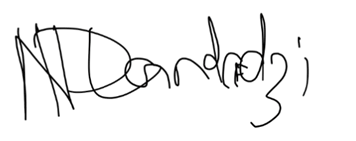
Nzwisisai Dandadzi